Engineering Opportunistic Digital Twins with Lingua Franca
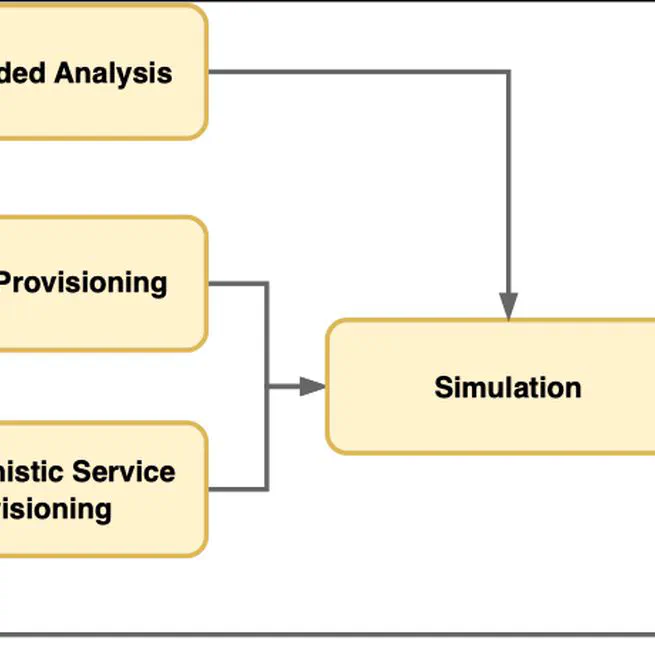
Digital Twins (DTs) are evolving from passive digital shadows into intelligent and adaptive systems empowered by AI. This work focuses on Opportunistic Digital Twins (ODTs), a new class of DTs that dynamically exploit edge–cloud resources to enhance the representation and control of Cyber-Physical Systems (CPS). We introduce an engineering approach for building dependable ODTs using the deterministic concurrency and explicit timing semantics of Lingua Franca (LF). A Smart Traffic Management case study on Emergency Vehicle Preemption (EVP) demonstrates how ODTs can adapt model selection at runtime while preserving deterministic coordination across distributed nodes. Results show that LF-based ODTs improve reliability, adaptability, and scalability in intelligent CPS deployments.
Nov 27, 2025

Edge AI in the computing continuum - Consistency and Availability at Early Design Stages.
Talk presenting my latest work about Edge AI in the computing continuum - Consistency and Availability at Early Design Stages at 7th Workshop on Parallel AI and Systems for the Edge
Jun 4, 2025
Edge AI in the computing continuum: Consistency and Availability at Early Design Stages
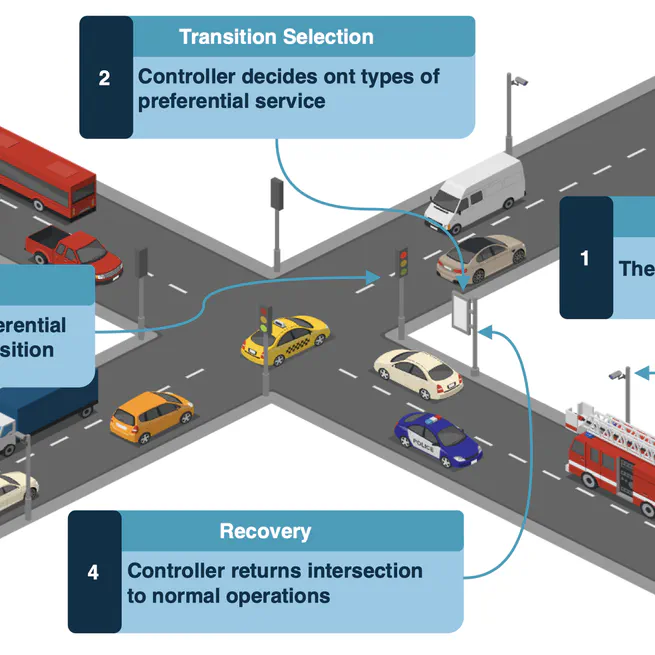
This paper integrates Edge Intelligence (EI) with the coordination language Lingua Franca (LF), using the Consistency-Availability-Latency (CAL) theorem to optimize Cyber-Physical Systems (CPS). We demonstrate an Emergency Vehicle Detection (EVD) system that prioritizes emergency vehicles through multimodal detection and LF’s deterministic coordination. Two deployment scenarios are evaluated—cloud-assisted and fully edge-based—guided by CAL tradeoffs. Experiments show that the edge-based solution reduces inference-to-actuation latency by 2.8x and energy consumption by 10.26%, while eliminating cloud bandwidth overhead.
Jun 3, 2025
Towards an Edge Intelligence-Based Traffic Monitoring System
This paper explores urban changes necessitating digital transformation, proposing an Edge Intelligence (EI)-based Traffic Monitoring System (TMS) for smart cities. It advocates for placing intelligence near data sources, showcasing early benefits like enhanced performance and reduced resource usage compared to cloud-centric methods.
Oct 1, 2023
Opportunistic Digital Twin: an Edge Intelligence enabler for Smart City
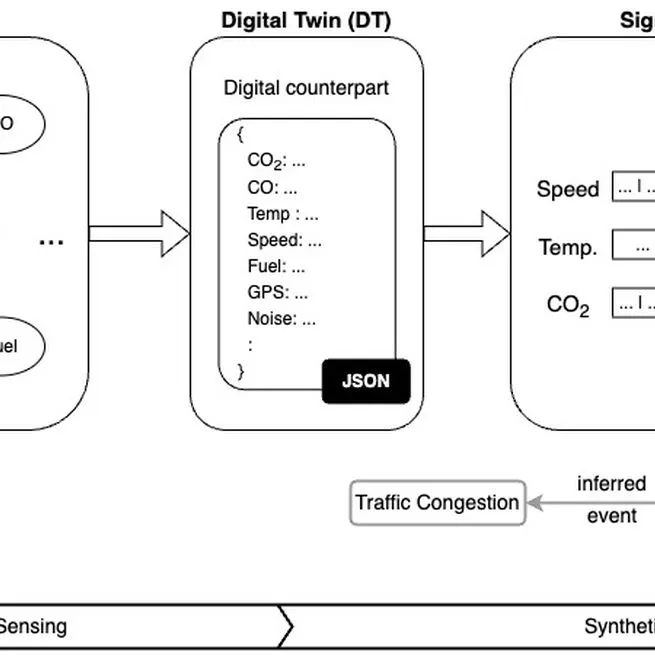
The paper discusses the importance of Digital Twins (DTs) enhanced by AI, Edge Computing, and IoT. It introduces the concept of "opportunistic" interpretation of DTs, creating dynamic digital replicas of physical objects through AI at the network edge. This approach is demonstrated through a traffic prediction use case, highlighting improved performance and resource efficiency.
Aug 18, 2023
Disclosing Edge Intelligence: A Systematic Meta-Survey
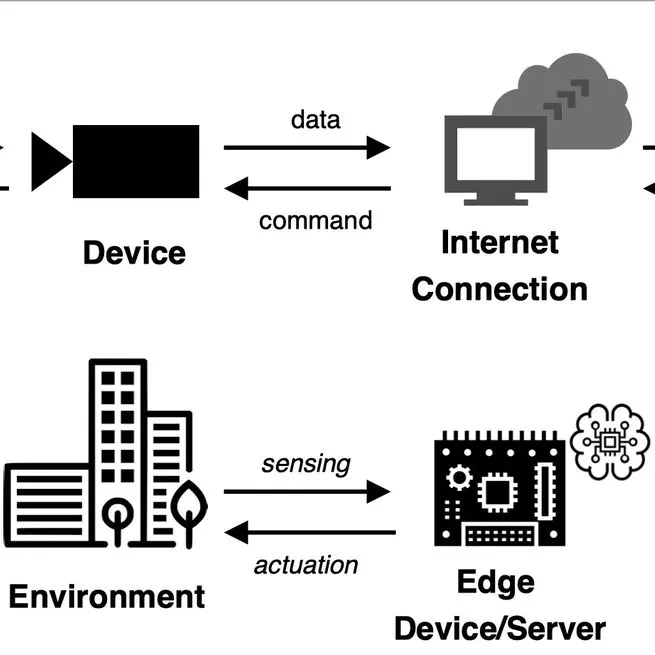
Edge Intelligence (EI) is a new solution for improving IoT services by overcoming cloud computing limitations. To analyze this field, this paper provides a systematic analysis of existing studies using the PRISMA methodology. The paper outlines research questions to explore the past, present, and future directions of EI, as well as its relationship with IoT and cloud computing.
Mar 2, 2023