Engineering Opportunistic Digital Twins with Lingua Franca
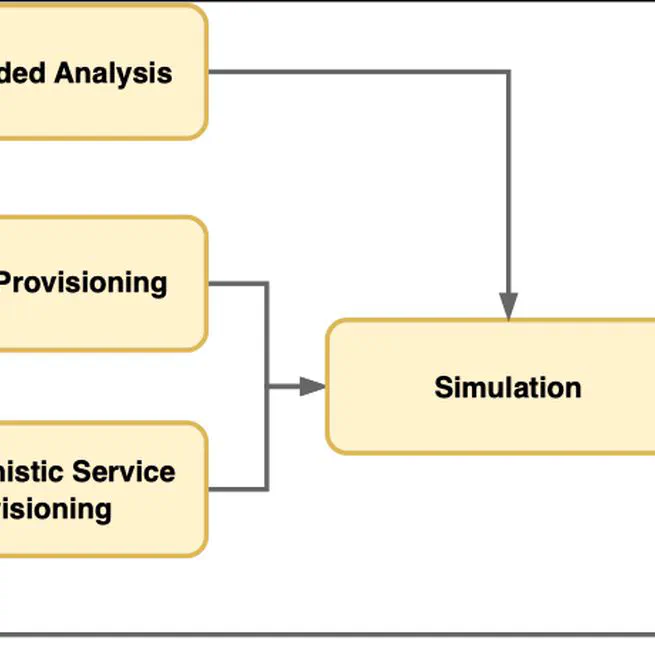
Digital Twins (DTs) are evolving from passive digital shadows into intelligent and adaptive systems empowered by AI. This work focuses on Opportunistic Digital Twins (ODTs), a new class of DTs that dynamically exploit edge–cloud resources to enhance the representation and control of Cyber-Physical Systems (CPS). We introduce an engineering approach for building dependable ODTs using the deterministic concurrency and explicit timing semantics of Lingua Franca (LF). A Smart Traffic Management case study on Emergency Vehicle Preemption (EVP) demonstrates how ODTs can adapt model selection at runtime while preserving deterministic coordination across distributed nodes. Results show that LF-based ODTs improve reliability, adaptability, and scalability in intelligent CPS deployments.
Nov 27, 2025
A Generative AI-Driven Architecture for Intelligent Transportation Systems
This paper addresses the need for intelligent transportation systems (ITS) by proposing an innovative architecture for vehicle trajectory prediction. It integrates a Long Short-Term Memory (LSTM) module with a generative AI component, specifically the RoBERTa Transformer model. The LSTM network with a recursive decoder outperforms a teacher forcing decoder on clean datasets, demonstrating higher robustness in time-series predictions. When video data is partially missing, performance drops, but RoBERTa-based data reconstruction significantly improves results (from 37% to 92%). These findings emphasize the importance of data reconstruction in handling incomplete information in real-world ITS scenarios.
Oct 11, 2024
Generative Digital Twins: A Novel Approach in the IoT Edge-Cloud Continuum
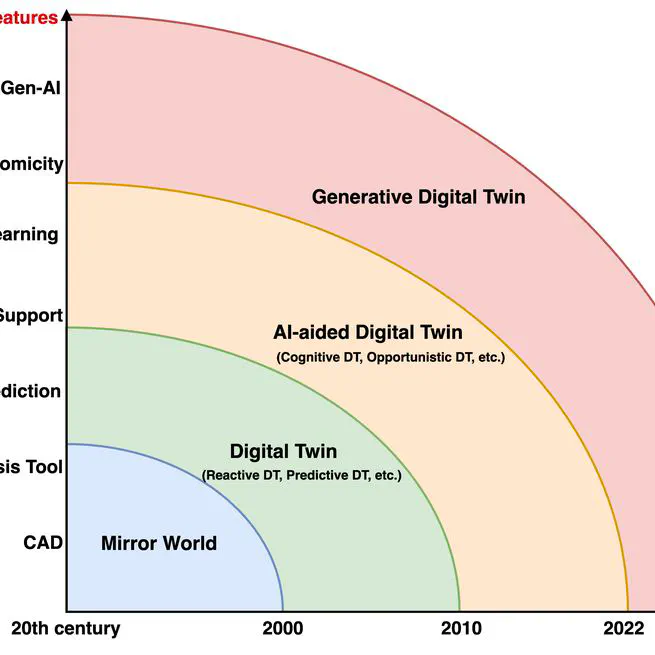
This paper introduces the concept of Generative Digital Twins (GDTs), an evolution of Digital Twins (DTs) that incorporates Generative AI to enhance prediction, control, optimization, and simulation capabilities. Originating in the manufacturing sector, DTs have been revitalized by advancements in IoT and AI, allowing them to interact with real-world data and achieve their goals more effectively. The paper defines GDTs, explores how Generative AI bridges model- and data-driven approaches, and highlights its benefits in IoT environments, particularly within Smart City scenarios where predictive accuracy, system robustness, and explainability are crucial.
Aug 16, 2024
Towards an Edge Intelligence-Based Traffic Monitoring System
This paper explores urban changes necessitating digital transformation, proposing an Edge Intelligence (EI)-based Traffic Monitoring System (TMS) for smart cities. It advocates for placing intelligence near data sources, showcasing early benefits like enhanced performance and reduced resource usage compared to cloud-centric methods.
Oct 1, 2023
Opportunistic Digital Twin: an Edge Intelligence enabler for Smart City
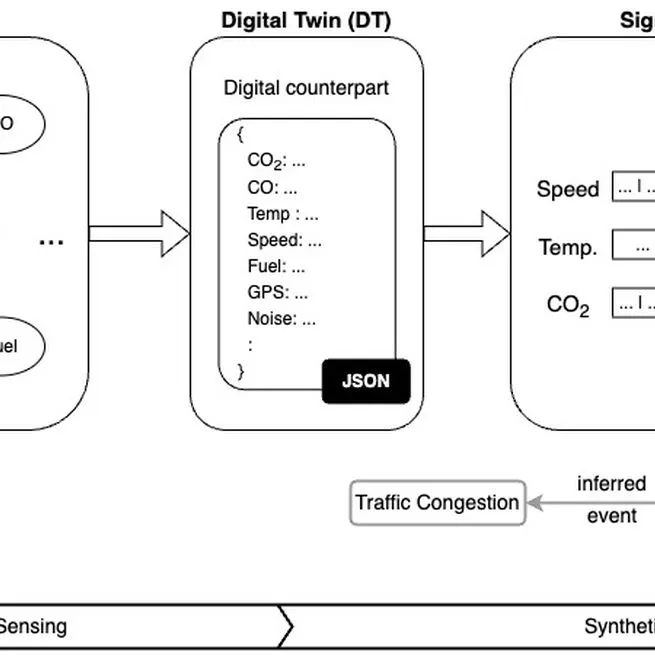
The paper discusses the importance of Digital Twins (DTs) enhanced by AI, Edge Computing, and IoT. It introduces the concept of "opportunistic" interpretation of DTs, creating dynamic digital replicas of physical objects through AI at the network edge. This approach is demonstrated through a traffic prediction use case, highlighting improved performance and resource efficiency.
Aug 18, 2023